Day 5
The last day of the walk turned out, unexpectedly. To be the first without rain, though at times we could see showers not too far away. Walking through Darby market Place at 9am was a little eery as, due to the coronavirus pandemic, it was unusually quiet. (Pic 1)
The city council have set up a Covid secure Alfresco dining experience in the Market Place, where each family bubble can sit in its own equivalent of a beach hut, and order a beer from the Derby Brewing Co stall and food from a wide variety of participating restaurants which is delivered to ‘your hut’. (Book a table at https://www.derbymarketplace.co.uk/book-a-table/ )
The river Gardens by the council house have been modified by the Our City Our River flood defence works, now complete bar the planting. We walked past the new circular Longbridge Wier Hydro Power House, with its distinctive green dome, which has powered the council house since 2013, with the surplus sold back to the grid. (Pic 2 & 3)
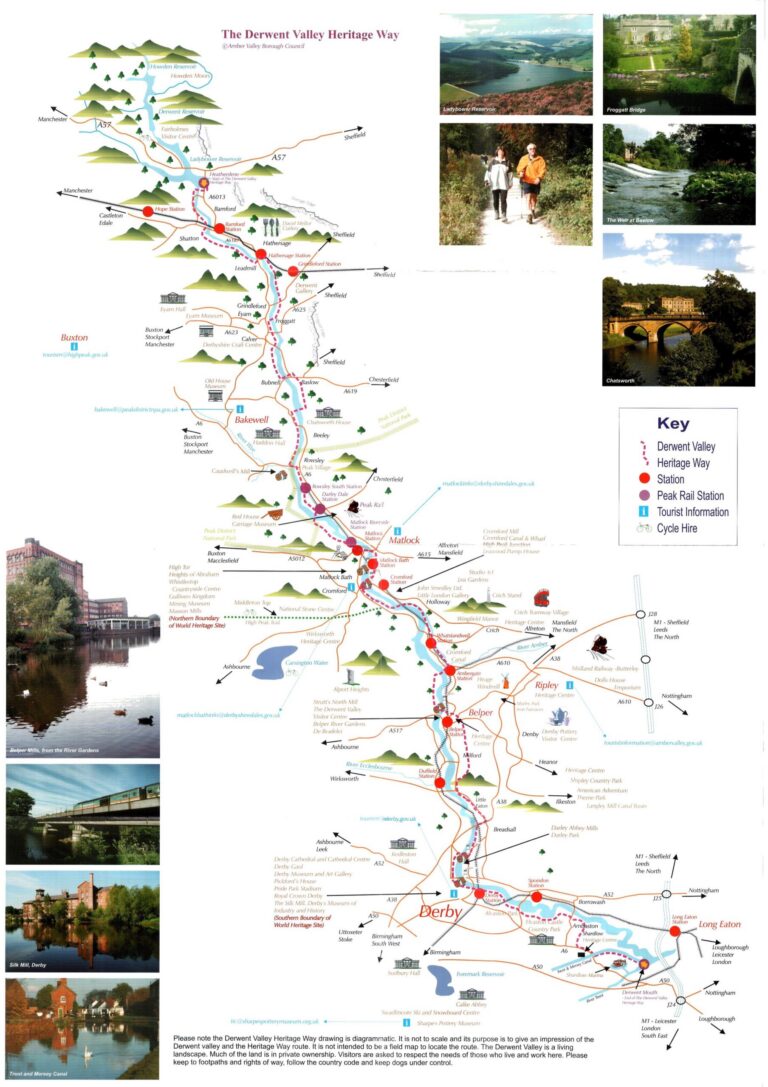
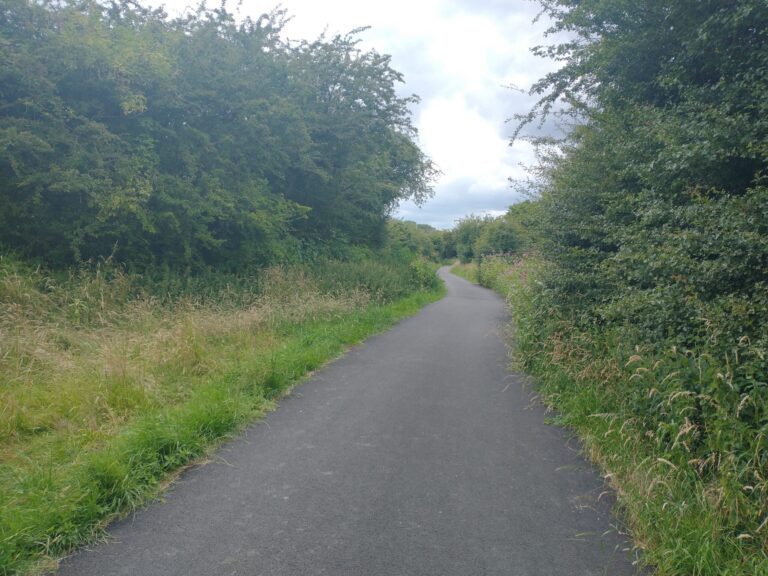
The Way follows the river path south east from the city centre. This section forms part of the Derwent Valley Cycleway and, as we saw, is well used, comfortably accommodating both cyclists and walkers.
Wending through Bass’s Recreation Ground, passing under the railway near the station it enters Pride Park. This not a municipal park but a business park, that replaces the original site of Derby’s manufacturing industry, once employing 6,000 people, it, together with the gas woks was derelict by 1990. I was the master planner commissioned by Derby City Partnership to bid for £37.5m of government money to regenerated it in 1997 with the slogan ‘Partnership through Regeneration, Development and Enterprise’ – PRIDE. The original turntable roundhouse, that can be seen from the railway station is now part of Derby College at the heart of the Park. Attracting the relocation of Derby County FCs ground to the park, was a key part of the strategy, more recently reinforced with the addition of the Velodrome Arena
Several new seating areas and vantage points have been installed by the city council with wildlife to see for those patient enough to sit quietly and watch.
We passed on into the green lawns of Alvaston Park, by the lake, before the character changed back to wildlife and countryside as we passed under the ring road at Raynesway.
The route to Borrowash is relaxed and attractive, but if you are seeking more interest there is a bridleway linking the short distance to Elvaston Park and Castle (really a country house) – well worth a visit – and you can re-join the Way at Borrowash Bridge.
From here it is just over a mile by the river and across open fields in the flood plain to Ambaston, a secluded one street Hamlet with recent houses mixed with older ones that together form a distinctive sense of place.
The long walk down Ambaston Lane was interrupted by more cycles than cars until we entered Shardlow village. Once dominated by traffic on the A6, the bypass created by the A50 and its link road has enabled Shardlow to regain its composure. We passed the Dog and Duck, a good lunch stop, as we were wanted to walk a little further. (Pic 4)
Proceeding to the church we looked down the drive opposite to glimpse Shardlow Hall. We were disturbed to see it was not in good condition and walked down the drive to investigate. (Pic 5).
Upon enquiring at the Joiners workshop in the outbuildings whom the owner might be I was asked why did I want to Know. I explained I was from the Derbyshire Historic Buildings trust to which he retorted, “You f…g lot are the problem, you can ‘f’ off now and get out of my f…g shop. ‘F’ you!”To which I replied “Thank you kindly for your help” and left. I am now even more fearful for the future of this magnificent 1684 building than upon first seeing its dilapidation.
We hurried across to the 1780 Clock Warehouse which straddles a dock for loading boats with grain and still retains in bold lettering “NAVIGATION FROM the TRENT to the MERSEY”. Now converted to a pub it was busy inside, but I was served quickly and efficiently with a draught ale and a tasty lasagne. (pic 7)
We crossed the road to a very informative story board on the bridge on the canal explaining the original nature of the numerous mills, stores and warehouses. After the canal opened in 1777 Shardlow grew quickly to a population 1,300 in 1841 when it must have been a bustling hive of activity, soon eclipsed by the coming of the railways. The port now has a charming air of gentle colourful leisure activity. (Pic 8 & 9)
Walking along the canal towpath l we were surprised to see just how many narrow boats there were, both alongside the canal and in the marinas beyond the opposite bank, many of which were clearly permanent homes, some having established mini-gardens on the immediately adjacent bank.
A little flotilla of canoes came past, which reminded me that the Derwent Valley Trust’s long-term vision is also to create a Derwent Valley Riverway paddle trail from the Upper Derwent Visitor centre down to the confluence with the Trent, matching the route we were walking. Together with the Derwent Valley Cycleway this could enhance sustainable travel within the valley, cycling up the valley over several days and visiting all the attractions and paddling back to Shardlow with the river flow providing most of the motion. (pic 10)
The stretch from here to Derwent Mouth is wide and easy walking with a long line of BWB visitor moorings at which there were several traditional boats beautifully maintained and decorated. (Pic 11)
As we reached Derwent Mouth the canal, Derwent and Trent opened out to provide a large expanse of water. In the distance we could see Sawley Church between the trees before retracing our steps to the New inn where we were to be picked up. (Pic 11 & 12)
We reflected upon the walk, marvelling at its variety and agreed that every day had produced a different character and lots of interest, demonstrating just how much the Derwent Valley has to offer.
We were also impressed that every hostelry we had visited had not only followed the Covid 19 guidance to the letter, but without exception provided us with excellent fayre, whether good pub food or haute cuisine and comfortable beds and clean facilities.