Day 1: Ladybower to Rowsley (27 km)
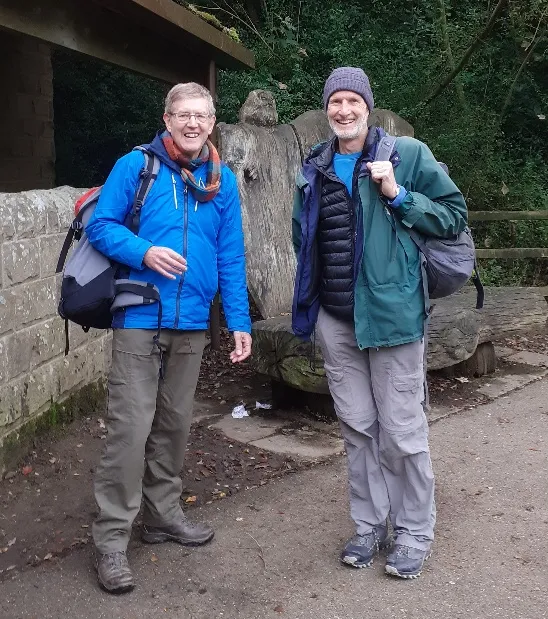
Taking an early train from Derby to Sheffield, it should have been an easy hop by bus to Ladybower Inn and the start of the Way. However, Tim had read an out-of-date bus timetable, still on the web, so the expected bus didn’t come! We called on Uber instead, and within minutes a cheery driver swept us on our way.
The Way itself leads southwards from the Heatherdene visitor centre car park, on a clearly marked path. Though initially among trees, a magnificent view of Ladybower Reservoir soon emerges. The Way descends to, and then goes right over, the mighty Ladybower dam.
Clon is a highly experienced civil engineer who has worked on many an international infrastructure project. This dam was the first of many engineering feats – bridges, dams, canals, weirs and an aqueduct – that we passed or crossed, that he was able to take delight in.
Far below, bubbling out from the dam base, we glimpsed the Derwent for the first time, to be our companion for the next three days. Here it seemed an energetic and playful teenager; we watched it grow in stature and dignity as we followed it down its valley.
We set out southwards (and downwards) through pleasant woodland, and were soon opposite the village of Bamford. Just south of Bamford the Derwent is joined by the curiously-named River Noe, coming from Edale and draining the Hope valley. Two busy little mountain rivers become one, and the Derwent, one might say, emerges into adulthood.
The path then hugs the river, through lush and rolling farmers’ fields, past ancient stepping stones and then over Leadmill bridge. We passed Hathersage and Grindleford, the path undulating gently, through field or woodland, close by or at a field’s width from river.
At the aptly-name Derwent Farm, we entered the tiny and tranquil village of Froggatt. We dropped down to its magnificent stone bridge, and enjoyed a boutique packed lunch in its shadow.
Calver, the first mill of substance, loomed ahead. Now, to power a mill from a flowing stream or river, you won’t get the best result if you just dip the mill wheel at some point into the flow, and then hope to see it turn. It’s better to delay the water somewhere upstream, maintain a reservoir for dryer times, and divert and channel some of it so that maximum drop and/or water speed occurs at the mill wheel itself. This is the pattern to be seen, with some variation, all down the Derwent.
Calver’s huge mill is announced by its elegant upstream weir, feeding a rushing “goit” – the man-made channel feeding the mill wheel. Once reached, the mill itself is converted into private accommodation, so you can’t get too close.
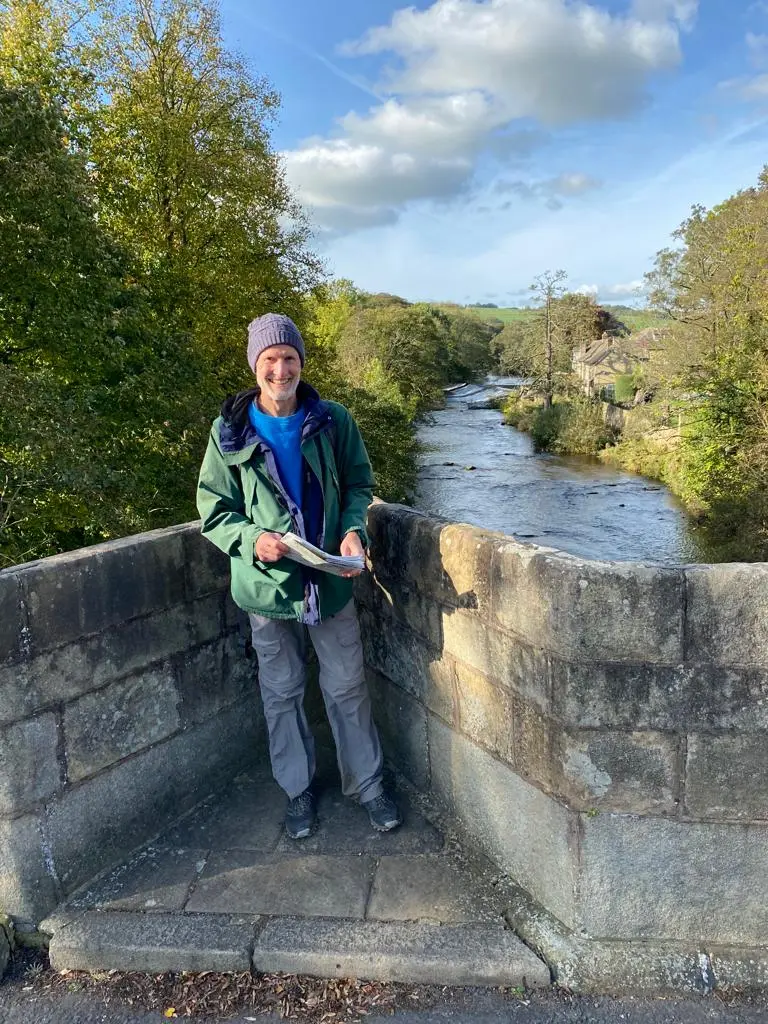
On we trudged to Baslow, entering it via its substantial stone bridge (pictured). Here we paused for a welcome afternoon tea and cake. A few short steps out of Baslow, and we were in the wondrous Chatsworth estate. The distant house gleamed in the late afternoon sun as we gently approached and passed it, crossing our beautiful Derwent on the stone bridge in front of the house.
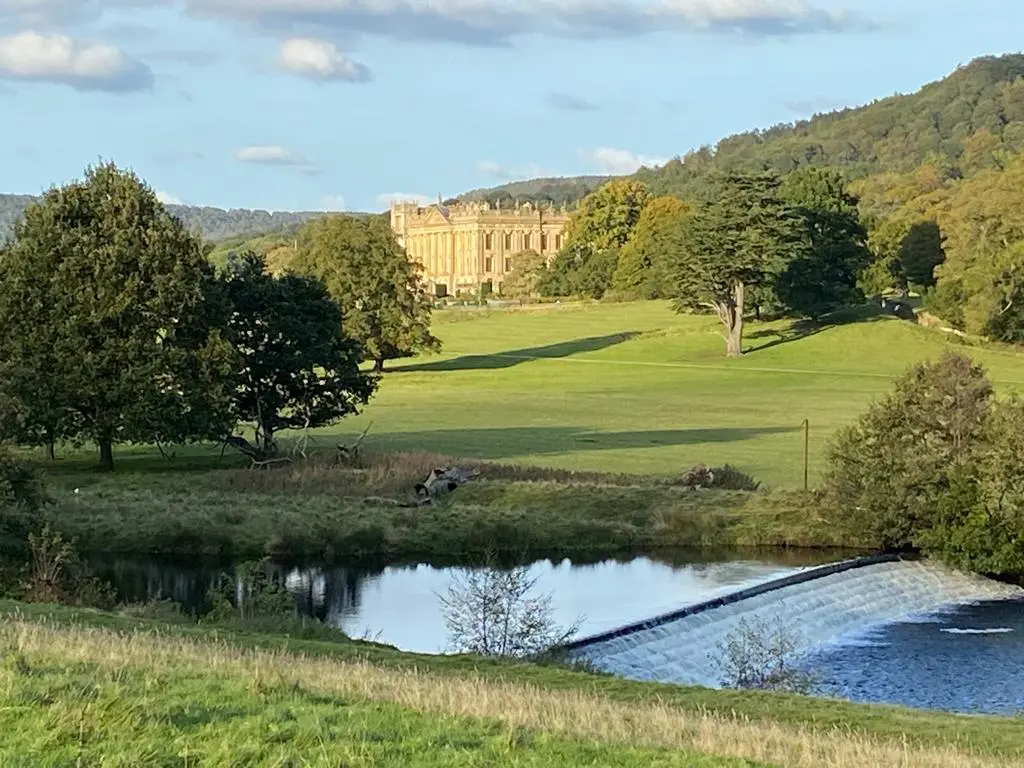
Leaving Chatsworth behind, we went through the hamlet of Calton Lees and were back in riverside fields again. After a couple of miles we passed under a disused railway bridge, joined a farm lane and came into Rowsley. Here we discovered the Grouse and Claret pub, which was to be our welcome home for the night.